
Choosing the best wines to start discovering wine is not about buying the most expensive bottles or the most famous labels. The best approach is to begin with wines that are easy to understand, enjoyable from the very first glass, and different enough from one another to help you discover which styles you enjoy most.
At Idyllica, we recommend starting by comparing different sensations: a fresh white wine, a light rosé, a young red, a more structured red, and a dry sparkling wine. This simple journey allows you to recognise the differences without having to memorise grape varieties, wine regions or technical terminology.
Quick answer: if you’re just beginning to discover wine, choose bottles that are balanced, aromatic and easy to drink. Try different styles, serve them at the correct temperature and enjoy them with food. You’ll soon discover whether you prefer fresh, fruity, smooth, full-bodied or sparkling wines.
Contents
- How to start discovering wine
- Which wine styles should you try first?
- Five Idyllica wines to get started
- How to compare wines without being an expert
- Serving temperature and glasses: two important details
- How to pair them with food
- Common mistakes beginners make
- What should your next step be?
- Frequently Asked Questions
How to start discovering wine
When people first get into wine, they often think they need to learn grape varieties, vintages and appellations. In reality, it’s much easier to begin by focusing on the sensations each wine offers.
- Do you enjoy freshness? Start with a young white wine or a dry sparkling wine.
- Do you prefer smooth, fruity flavours? Try a rosé or a young red wine.
- Are you looking for more body? Choose a well-balanced red wine with greater structure.
- Are you attracted by aromas? Compare floral, citrus, fruity and spicy wines.
- Do you want to understand wine better? Taste two different styles on the same day and compare them.
Idyllica tip: don’t try to decide whether a wine is “good” or “bad” after your first sip. Instead, ask yourself whether it feels fresh, smooth, intense, dry, fruity or simply easy to drink.
Which wine styles should you try first?
A good introduction to wine should not be limited to just one type. Tasting different styles helps you understand what changes from one bottle to another.
A fresh and aromatic white wine
Young white wines are often an easy introduction to the world of wine. They are fresh and expressive, making it easy to recognise citrus, floral and white-fruit aromas.
A light rosé
Rosé helps you discover an intermediate style: it retains the freshness of many white wines while introducing the red-fruit aromas associated with red grape varieties.
A young and fruity red wine
It is one of the best options for getting started with red wine. It offers easily recognisable fruit, softer tannins and less influence from oak.
A more structured red wine
After tasting a young red, it is useful to compare it with a fuller-bodied, more structured wine. This will help you recognise body, tannins and length more clearly.
A dry sparkling wine
Sparkling wines help you discover how bubbles, acidity and ageing influence the tasting experience. They are also incredibly versatile when paired with food.
Five Idyllica wines to get started
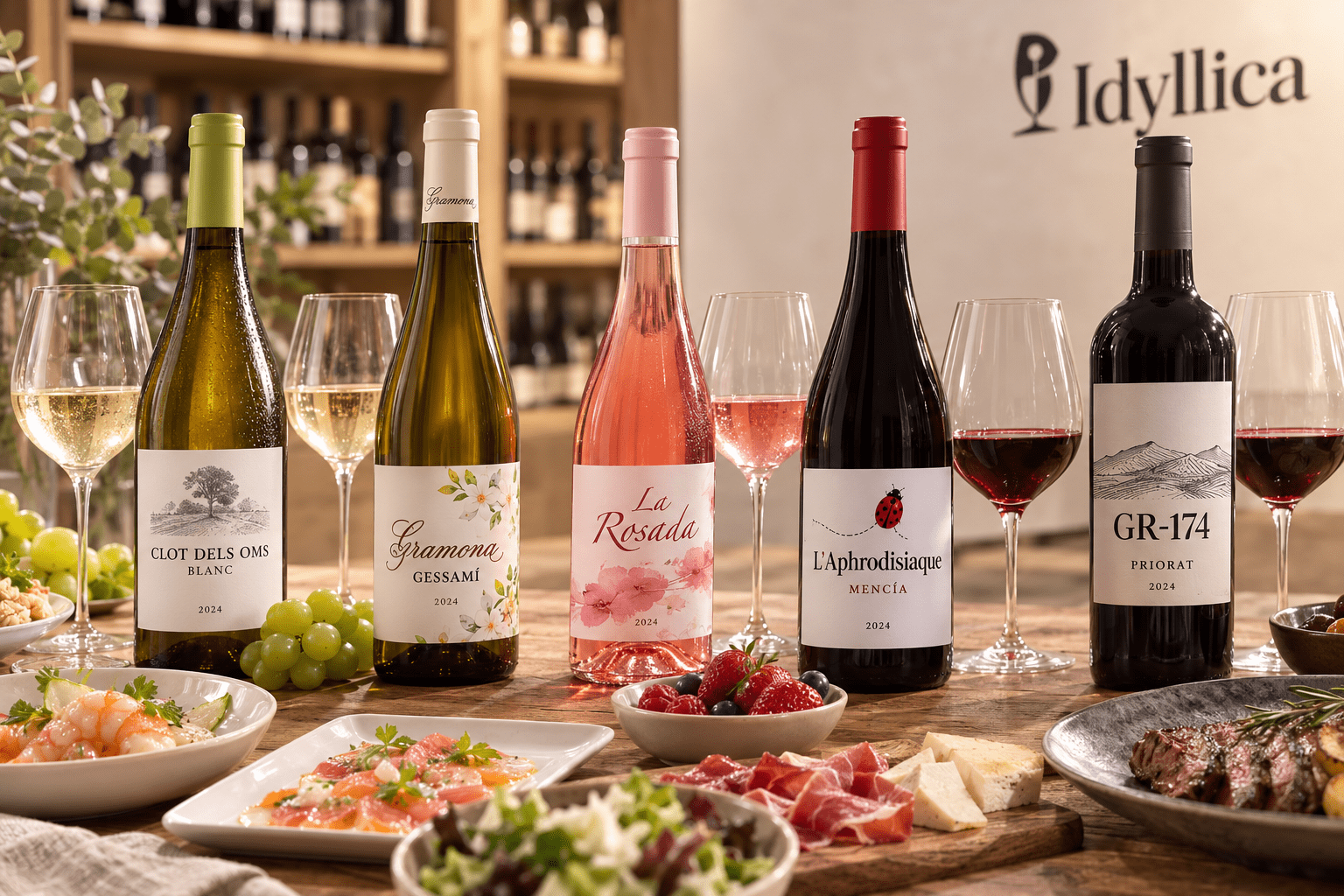
This selection offers a journey through five different wine styles available in the Idyllica wine shop. The aim is not to decide which one is the best, but to discover which sensations you enjoy most and which style of wine suits your taste.
Clot dels Oms Blanc 2024
What it helps you discover: the freshness, acidity and fruity, floral aromas that characterise a young white wine.
This fresh, aromatic, smooth and well-balanced white wine is easy to drink, making it an excellent first choice for anyone beginning to explore the world of white wines.
Perfect with: appetisers, fish, seafood, salads, vegetables, light rice dishes and Mediterranean cuisine.
Gramona Gessamí 2024
What it helps you discover: the aromatic intensity of a floral, expressive white wine with a highly distinctive personality.
Made from Sauvignon Blanc, Gewürztraminer and Muscat of Alexandria, this wine is exceptionally aromatic, delicate and refreshing. A perfect choice for learning to recognise floral and fruity aromas in the glass.
Perfect with: appetisers, Asian cuisine, fish, seafood, salads, mildly spiced dishes and soft cheeses.
La Rosada 2024
What it helps you discover: the aromas of red berries and flowers in a light, silky and refreshing wine.
Made from Garnacha Negra, it displays aromas of wild red berries, wild strawberries and delicate floral notes. On the palate it is fresh, light, silky and pleasantly citrus-driven.
Perfect with: appetisers, salads, pasta, rice dishes, fish, mild Asian cuisine and casual dinners.
L’Aphrodisiaque Mencía 2024
What it helps you discover: how a young red wine can be fresh and fruity without being harsh or overly tannic.
This Mencía red offers aromas of fresh fruit, strawberries and cherries. On the palate it is rounded and fresh, with soft tannins that make it an excellent introduction to red wines.
Perfect with: cured meats, white meats, pasta, pizza, semi-cured cheeses and casual dinners.
GR-174 2024
What it helps you discover: a fuller-bodied red wine with greater depth and structure, while still offering sweet tannins and a velvety finish.
This Priorat wine combines aromas of red and black fruit with mineral and balsamic notes. Rich, balanced and elegant on the palate, it is an ideal step towards more structured red wines without being overwhelming.
Perfect with: meat dishes, stews, burgers, grilled food and aged cheeses.
