
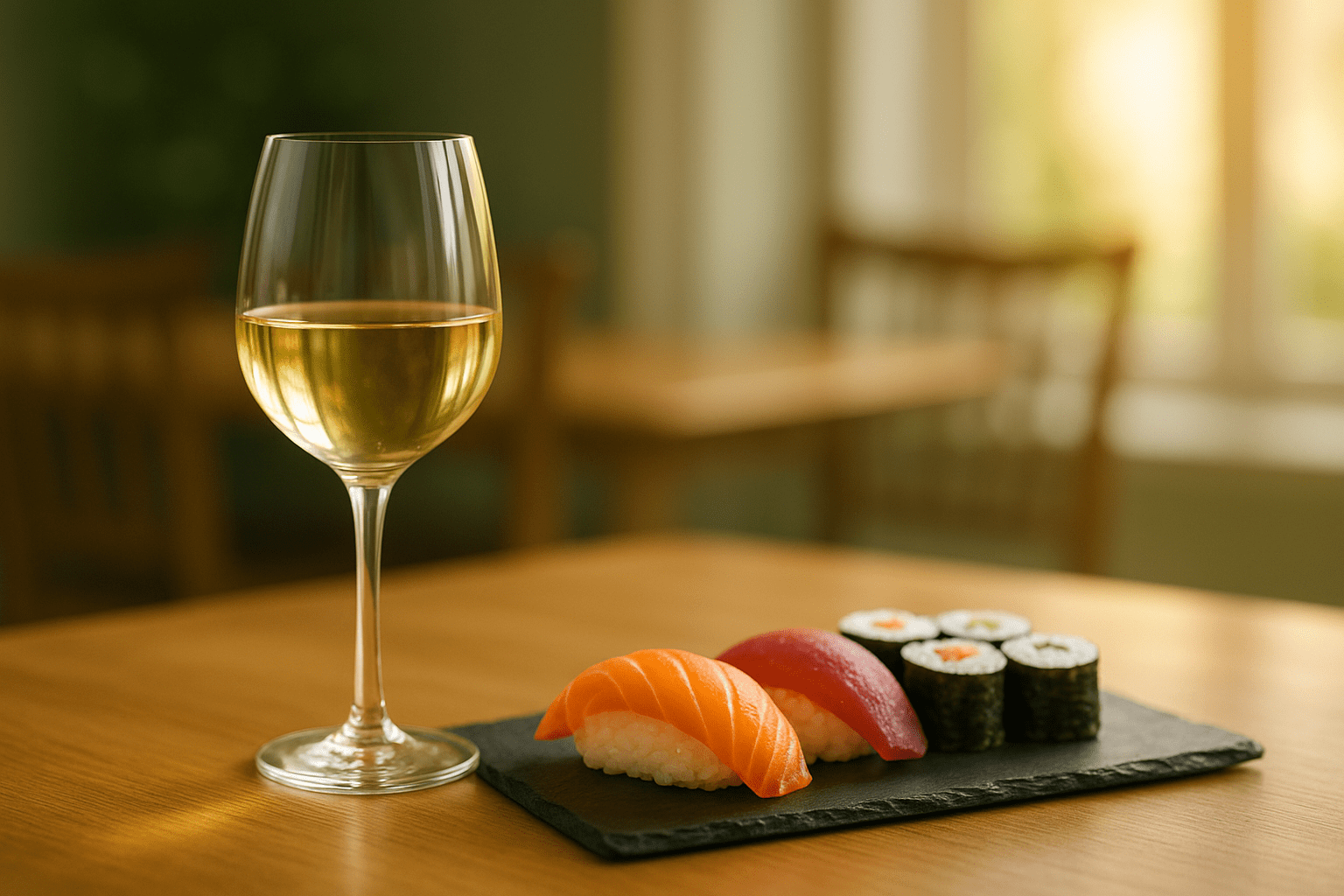
Looking for the best wine for sushi without the fuss? Here are seven foolproof choices that enhance raw fish, balance soy sauce, and refresh after every bite. The key is acidity, aromatic cleanliness, and moderate alcohol, so the wine adds without masking the delicacy of sushi.
Why sushi calls for fresh wines
Sushi shines with wines that have high acidity, a citrus/floral profile, and a medium-light body; that’s how you counter the unctuousness of the fish, the umami of soy, and the slight sweetness of rice. Avoid tannic reds and pronounced oak, which amplify metallic notes. Go for young whites, dry sparklers, and pale rosés that cleanse and extend flavor.
How to nail it every time: three quick criteria
Think acidity, texture, and aroma. Acidity organizes and refreshes; texture supports fatty fish (salmon, toro); aroma (citrus, saline, floral) makes each bite “lift.” If there’s heat, look for a touch of sweetness (off-dry), and if there’s tempura, add bubbles to cut the fat.
1) Albariño (Rías Baixas): citrusy, saline, and super versatile
Albariño is the go-to wine for sushi thanks to its crisp acidity, bright citrus (lime, grapefruit), and Atlantic salinity. It shines with tuna nigiri and salmon sashimi, and excels with cucumber or avocado uramaki. Look for recent vintages to prioritize freshness and tension, and avoid oak aging that adds unnecessary weight to the pairing.
2) Godello (Valdeorras/Bierzo): white fruit and fine minerality
Godello brings creamy volume, white fruit (pear, apple), and elegant minerality, ideal for rolls with sriracha mayo, rich toppings, or fatty fish. Its texture envelops without dominating and its balanced acidity keeps the palate clean. If you like bites with toasted sesame or eel, Godello is a great fit.
3) Riesling (dry or off-dry): citrus precision and spice control
Dry Riesling offers electric acidity and notes of lime/green apple that cut salmon fat and streamline tempura; in its off-dry version it adds light sweetness that tames the heat (wasabi, sriracha) without losing nerve. Avoid very sweet styles if soy dominates, to prevent overload. A Kabinett or Feinherb can be perfect allies depending on the spice level.
4) Verdejo (Rueda): herbal, citrusy, and easy to love
Verdejo combines citrus fruit, herbal touches, and a slightly bitter finish that pairs with nori and cucumber. It’s approachable, refreshing, and perfect for mixed trays when you want one wine for everything. The young, unoaked profile works best with delicate sashimi and vegetable maki.
Find your wine for sushi
Pick your style and get it right.
5) Txakoli (Basque Country): subtle fizz and saline snap
Txakoli brings a light spritz, moderate alcohol, and salinity that elevates sushi’s maritime character. It works with white fish, prawn, scallop, and tuna nigiri thanks to its piercing freshness. Served well chilled, its spark cleanses the palate and reboots each bite like the first sip.
6) Cava Brut Nature: fine bubbles for tempura and crunchy bites
A dry Cava Brut Nature with fine bubbles and taut acidity is ideal for crispy uramaki, ebi tempura, and rich toppings. The mousse “degreases” and highlights umami without adding sweetness. If you want maximum cleanliness, choose Brut Nature; if you prefer softness, a Brut will balance with a touch of dosage.
7) Pale rosé (Garnacha/Provence): subtle fruit and freshness
**Pale rosé brings light red fruit, floral notes, and gentle acidity that pairs with vegetable rolls, tuna tartare, and salmon when you want a sweeter-leaning profile without losing lightness. Avoid very structured or oaked rosés, which can overpower sushi and diminish its delicacy.
Quick guide: what to choose for your platter
If your tray features fatty salmon and creamy sauces, prioritize acidity (Albariño, Cava) or fine texture (Godello). If there’s spice, lean toward off-dry Riesling or a friendly rosé. For delicate white-fish pieces, reach for Txakoli or young Albariño. Mixed tray? Verdejo or Albariño as a do-it-all solution.
Serving temperature and glassware
Serve whites at 8–10 °C and sparklers at 6–8 °C to maximize aroma and freshness; above 12 °C the alcohol shows and precision is lost. Use medium-bowl white-wine glasses for Albariño, Godello, Verdejo, and Riesling, and a flute or sparkling glass for Cava. For pale rosés, 8–10 °C keeps verve and clean fruit.
Pairing tips that make the difference
Go easy on soy so it doesn’t mute the wine, dose wasabi if you opt for very dry, taut wines, and avoid excess ginger between sips (it resets the palate too much). Alternate one sip for every two bites and skip very sweet sauces if you’re pouring Brut Nature. If you love richer sauces, switch to off-dry Riesling and enjoy the balance.
Common mistakes (and how to avoid them)
Choosing reds with high tannin and marked oak is mistake number one; they create bitterness and metallic notes with fish. Serving wine too warm flattens acidity and amplifies alcohol. Forcing pairings with intense sweetness can clash with soy and wasabi. The fix: taut whites, dry sparklers, and light rosés, served well chilled.
Mini checklist to buy with confidence
On the label, look for lively acidity, moderate alcohol (11.5–12.5% in many styles), and a citrus/floral profile; avoid oak when the sushi is delicate. Keep a dry sparkler in the fridge for tempura and crunchy rolls, and an off-dry Riesling as a “rescue” for spicy dishes. If in doubt, Albariño or Verdejo are reliable crowd-pleasers.
Pairing suggestions by piece type
Tuna or toro nigiri: Albariño for tension or Godello for texture.
Salmon sashimi: Dry Riesling for precision or pale rosé for subtle fruit.
Tempura (ebi, vegetables): Cava Brut Nature for fine bubbles and cleansing.
Vegetable rolls/pronounced nori: Verdejo for its herbal touch and fresh finish.
White fish/prawn/scallop: Txakoli for its spark and salinity.
Quick buyer questions
One wine for the whole dinner? Albariño or young Verdejo for balance and versatility.
Is there sriracha/kimchi? Off-dry Riesling for subtle sweetness and heat control.
Lots of crunch and frying? Cava Brut Nature to cut through fat and refresh.
Prefer rosé? Pale Garnacha rosé with lively acidity and floral aroma.
Conclusion: your roadmap of 7 sure bets
With these seven styles —Albariño, Godello, Riesling, Verdejo, Txakoli, Cava Brut Nature, and pale rosé— you’ll have reliable wins for any sushi tray. Prioritize acidity and freshness, adjust sugar if there’s heat, and add bubbles with tempura. Start with Albariño as your wild card, save a sparkler for crunchy bites, and keep an off-dry Riesling ready to rescue spicy moments. That’s how every sushi dinner becomes a memorable pairing.
