Knowing how to store wine at home is the difference between opening a bottle that’s merely “fine” and truly enjoying it. You don’t need a cellar or a professional wine fridge: with 3 well-controlled factors (temperature, light, and position) you can keep wine in good condition for weeks or even years, depending on the type.
At Idyllica we see it every day in the shop and at our wine tastings in Barcelona: many bottles that “weren’t as good as I expected” don’t fail because of the wine itself, but because of how they’ve been stored at home.
Quick answer: to store wine at home, keep it in a cool, stable place (ideally 12–16 ºC), away from light (especially sunlight), and in a horizontal position if it has a natural cork. Avoid temperature swings, the kitchen, radiators, and shelves in direct sun.
Table of contents
- The 3 principles for storing wine at home
- Ideal temperature: what range to aim for (and what to avoid)
- Light: why sunlight is enemy #1
- Bottle position: on its side, upright, and when it matters
- Humidity and ventilation: the detail most people miss
- The best (and worst) places to keep wine at home
- How to store red, white, and sparkling wine (quick and clear)
- Common mistakes when storing wine
- Frequently asked questions
The 3 principles for storing wine at home
If you only remember one idea, make it this: wine stores well when it’s left in peace. “In peace” means: stable temperature, darkness, and the right bottle position.
- Temperature: cool and, above all, consistent.
- Light: the less, the better (and no direct sun).
- Position: on its side if there’s natural cork; upright if it’s a screw cap.
Idyllica tip: if you’re keeping wine for more than 2–3 weeks, think “cool and dark area,” not “wherever it fits.” The kitchen is usually the worst place.
Ideal temperature: what range to aim for (and what to avoid)
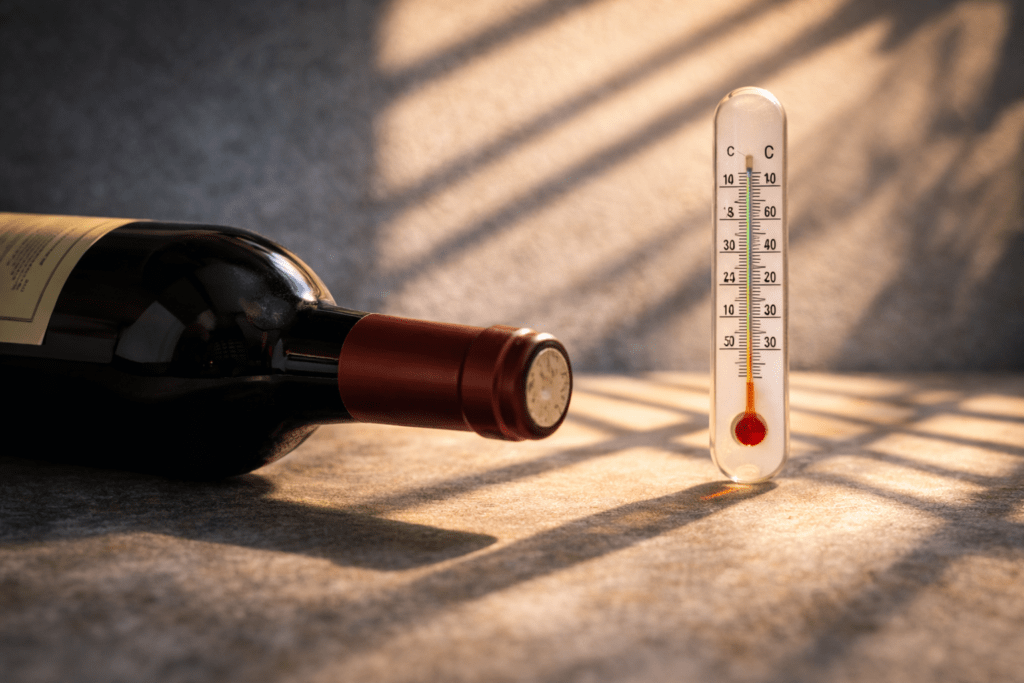
Temperature is the number-one key to storing wine at home. The ideal is a cool range and, above all, stable.
- General ideal: 12–16 ºC
- Acceptable if you have no alternative: 16–18 ºC (better for relatively soon consumption)
- Avoid: sudden swings (up and down) and temperatures above 20–22 ºC on a regular basis
Why does it matter so much? Because heat accelerates wine aging, “cooks” delicate aromas, and can make a wine lose freshness. And sudden shifts (for example, being near the oven, a radiator, or a window) stress the wine and degrade it sooner.
Rule of thumb: if you’d feel comfortable there wearing a light jacket, the wine usually will too.
Light: why sunlight is enemy #1
Light—especially direct sunlight—can damage wine and speed up reactions that dull aromas and freshness. This effect (sometimes called “lightstruck”) is particularly critical for whites, rosés, and sparkling wines.
- Best: darkness or very dim light.
- Avoid: shelves near windows, balconies, display cabinets with strong lighting, or direct light for many hours a day.
Idyllica tip: if your wine “lives” on display on a pretty shelf, make it wine you’ll drink soon and keep it away from sun. For storing, a closed cabinet is better.
Bottle position: on its side, upright, and when it matters
Position matters mainly because of the type of closure. The goal is to keep the closure in good condition so air doesn’t get in.
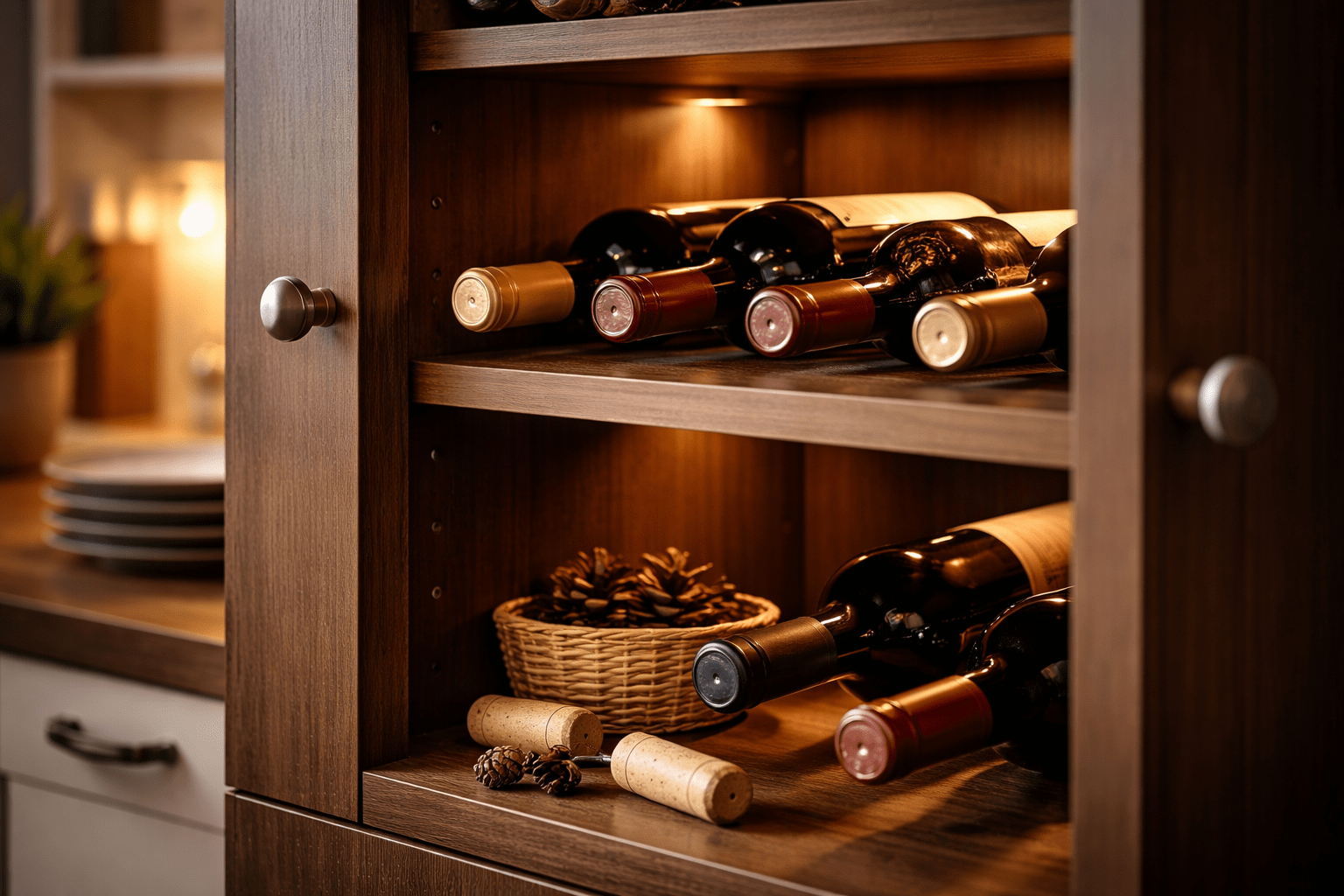
- Natural cork: store the bottle on its side so the cork doesn’t dry out.
- Screw cap: you can store it upright with no problem.
- Technical or synthetic cork: horizontal is still ideal, though it’s a bit less critical.
What if you’re only storing it for a few days? For near-term drinking, position is less decisive. But if the idea is to store (weeks/months), follow the closure rule.
Humidity and ventilation: the detail most people miss
Humidity matters mainly for wines with natural cork: an overly dry environment can dry out the cork over time. At home you don’t need to obsess, but avoid extremes.
- Suggested range: 60–75% relative humidity.
- Avoid: very dry areas next to heating or devices that dry the air.
Also, wine benefits from an environment with few strong odors. Not because the bottle “absorbs” smells like a sponge, but because in heavy-odor spaces (paint, cleaning products, solvents) the overall conditions are usually worse for storage.
The best (and worst) places to keep wine at home
If you don’t have a wine fridge, the best option is usually an interior cabinet or a cool, dark corner of the house.
Best places
- Interior cabinet (no sun, away from the kitchen/heating).
- Interior hallway or a cool area of the home.
- Cool storage room (as long as there are no sudden swings and it doesn’t smell of chemicals/paint).
Worst places (very common)
- Kitchen: heat, temperature changes, and vibrations.
- On top of the fridge or near the oven.
- Near a window or in the sun.
- Next to radiators or direct air conditioning.
- “Display” living room shelf if it gets sun and temperature swings.
Idyllica tip: if you’re unsure between two spots, always choose the darker and more stable one.
How to store red, white, and sparkling wine (quick and clear)
For home storage, the core rule is the same, but there are nuances depending on the style.
- Red wine: usually tolerates slightly higher temperatures, but avoid heat. Ideal 12–16 ºC.
- White and rosé: more sensitive to light and heat. Best in an even cooler, darker spot.
- Sparkling (cava, champagne, corpinnat): especially sensitive to light and swings. If you’re keeping them for a near occasion, a cool area is best (or a wine fridge/fridge with control).
If you want to be very precise, “perfect” storage depends on whether the wine is for near drinking or for keeping months/years. But for most homes, controlling temperature, light, and position already puts you ahead of 90% of cases.
Common mistakes when storing wine
- Keeping bottles in the kitchen “because they’re handy.”
- Leaving wine on a shelf in direct sunlight.
- Storing cork-closed wines upright for months.
- Moving bottles from cold to warm (or vice versa) repeatedly.
- Keeping wine near heat sources or vibration.
These are very common mistakes… and easy to fix with a couple of changes.
Frequently asked questions
What’s the ideal temperature to store wine at home?
As a general rule, the ideal temperature to store wine at home is 12–16 ºC, prioritizing stability and avoiding sudden swings.
Can you store wine in the fridge?
For near-term drinking, yes. But for storing over weeks or months, a domestic fridge isn’t ideal due to dryness and frequent use (changes and vibrations). If you do it, it’s better for bottles you’ll drink soon.
Should wine be stored on its side or upright?
If the wine has a natural cork, it’s best to store it on its side so the cork doesn’t dry out. With a screw cap, it can be stored upright without problem.
Storing wine at home is simpler than it seems: stability, darkness, and the right position. And if you want recommendations based on your home and how you drink wine, stop by Idyllica or join one of our wine tastings in Barcelona.