Who doesn’t like a glass of these delicious drinks to celebrate work successes, personal experiences or the arrival of the new year? However, the truth is that both cava and champagne have a similar taste and appearance and few know how to distinguish them. Therefore, today we give you some clues!
Let’s start with the basics . That’s right, they are two drinks that are very similar, and both are in the same category, that of sparkling wines. However, what exactly are sparkling wines, if we stick to the official information of the experts?
What are sparkling wines?
Both types of alcoholic beverages, which are within the group of sparkling wines, follow a similar specific production process. In this method, the grape goes through various fermentations and, consequently, contains natural carbon dioxide.
How do you get these delicious drinks?
The En Botella portal tells us about various differentiated phases, let’s review them.
– First phase: the objective of this step is to obtain wine from three types of grapes in different proportions depending on the variety. In the production of Champagne, for example,
3 different types of grapes are used, Pinot Noir, Pinot Meunier and Chardonnay; as indicated by the mentioned portal.
– Second phase: in this second step, the wine is mixed with the liquor based on sugar and yeast.
- In the third phase , it is fermented for at least 9 months. During this time, more alcohol and carbon dioxide are produced, which will generate the well-known and distinctive bubbles of these sparkling drinks. In this period of time, the yeasts die, being deposited at the end of the bottle to later be extracted in the disgorgement phase. In this link you will find more information about this traditional practice as well as in this other you will find a video-report produced by Spanish television explaining the entire process, from the harvest to the final bottling.
Typologies
As you imagined, the longer the fermentation time, the higher the quality of our sparkling wine. We will differentiate between three categories according to their age.
- Young: 9-15 months.
- Reserve: 15-30 months.
- Grand reserve : more than 30 months.
While, according to its flavor, we find 4 types:
– Brut nature : 3g/l without added sugar.
- Brut : up to 6 g.
- Semi dry : between 32 and 50 g/l.
- Sweet : more than 50 g/l.
-
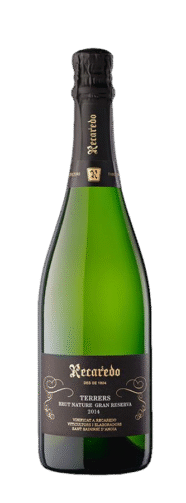
 Recaredo Brut Nature Terrers28,95 €
 -
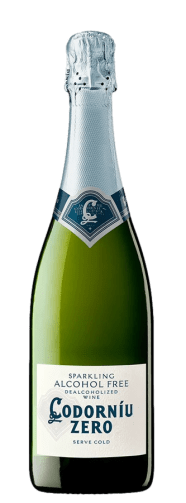
Codorniu Espumoso Zero Alcohol7,10 €
But, what is the difference between Cava and Champagne?
Beyond the mixture of grape varieties chosen, the decisive differential fact is found in the denomination of origin .
Champagne comes from Champagne, in the northeast of France, while cava comes from all over Spain. The consequence of this fact is that the type of grape will be different depending on the crops, climates, environments and ecosystems of each area. In this way, we will find differences in flavor and color in each type of sparkling wine.
Thus, we differentiate varieties such as Pinot Noir, Meunier or Chardonnay in Champagne and, on the other hand, Parellada, Xarel lo, Macabeo or Trepat in Cavas.
If you want to learn more about this process, as stated by the Wine Tourism portal, in Catalonia:
“Lhe best way to learn about making the traditional method is by taking a trip to the area near Barcelona. Big ones meet there cava producers such as Freixenet or Codorniu, as well as small family cellars that continue to make cava in an artisan way l”.
We know each other?
Although you can always get in touch with us and we allow us to resolve any doubts, as well as we can advise you on everything you need within this wonderful wine sector. We will be happy to help you and offer you the highest quality, flavor, professionalism and experience!